Thursday, December 15, 2016

Tuesday, December 13, 2016
Begin Ch 18: Classification; Crash Course video; notes; textbook reading & questions
Welcome back from your Snow Days! ❄
(no baby yet 😁)
Turn to a new right hand page in your notebook
Chapter 18: Classification 12/13/16
Learning Objective: I can explain the importance of the field of taxonomy, scientists' system for classifying living things.
1. Watch 'Taxonomy: Life's Filing System' Crash Course video (12 mins) and answer the following questions. Write these down under your Learning Objective before starting the video...
'Taxonomy' Crash Course video questions
1. Another name for the phylogenetic tree is ___.
2. The name of the Swedish botanist who developed the modern system of naming organisms is ___.
3. The four kingdoms are ___, ___, ___, & ___.
4. Humans belong to the kingdom ___.
2. Take notes on right hand page-
Phylogenetic tree:
Domain
Kingdom
Phylum
Class
Order
Family
Genus
Species
 (←write down in notes)

(no baby yet 😁)
Turn to a new right hand page in your notebook
Chapter 18: Classification 12/13/16
Learning Objective: I can explain the importance of the field of taxonomy, scientists' system for classifying living things.
1. Watch 'Taxonomy: Life's Filing System' Crash Course video (12 mins) and answer the following questions. Write these down under your Learning Objective before starting the video...
'Taxonomy' Crash Course video questions
1. Another name for the phylogenetic tree is ___.
2. The name of the Swedish botanist who developed the modern system of naming organisms is ___.
3. The four kingdoms are ___, ___, ___, & ___.
4. Humans belong to the kingdom ___.
2. Take notes on right hand page-
Phylogenetic tree:
Domain
Kingdom
Phylum
Class
Order
Family
Genus
Species
(You can use this mnemonic device to help you remember the order after 'domain;' write it down!)
Kings Play Chess Only For Good Sportsmanship
(Or think of your own!)
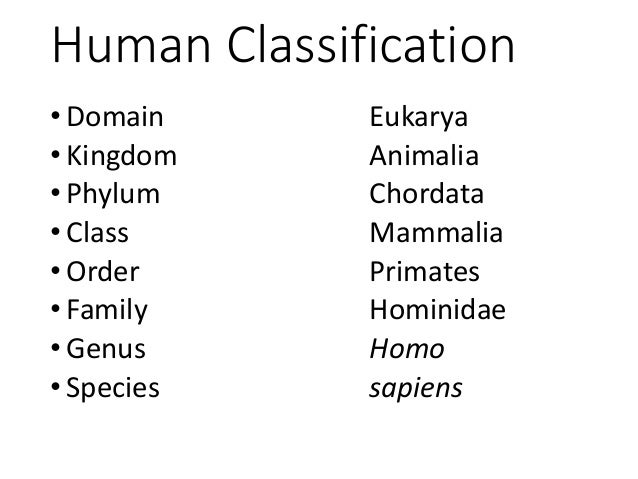 (←write down in notes)
Left side processing idea:
3. Textbook Reading & Questions
-Dismiss by table to get a textbook OR use the online textbook (my.hrw.com, biology387, biology).
-Turn to Chapter 18 Section 1, page 423.
-Read pages 423-426
-Answer Key Ideas questions #1-3
-Write question & answer in notebook under today's notes
4. Do left-side color processing in notebook
Wednesday, December 7, 2016
Ch 17 Test & Notebooks Due
Chapter 17 Test & Notebooks due today!
-Use first 15 minutes of class to study for your test and finish up notebooks
-Test taking expectations:
*Try your best, take your time, & stay focused
*No talking (everyone deserves a quiet testing environment)
*No personal electronic devices while testing
*When finished, bring your test up to me and then read, do work, listen to music quietly.

We're grading tests and notebooks differently today!
TESTS: -Use a pen and trade with a trusted neighbor
-Write your name in the blank provided for the test you're grading
-Put a slash mark through any incorrect answers
-Questions are worth 2 points each
-Please add up the total points correct out of 30 and write it on the front page (?/30)
-Tests need to be turned in to be entered into Synergy
NOTEBOOKS: Now you will grade the notebook of the person whose test you graded. Give them an honest & accurate grade (ask yourself: What Would Ferro Do?). Write their grade in their notebook as well as on their test paper (?/50) based on the rubric below. Make sure your notebook grade is written on your test in the appropriate spot to get credit. No need to turn in your notebook.
Notebook Scoring Rubric
50 points
-Table of Contents up to date
-Has 'Tragedy' intro, data, questions, & guided notes
-Has warm ups and color processing on every left side
-Color processing shows high level critical thinking
40 points
-Table of Contents up to date
-Has 'Tragedy intro, data, questions, & guided notes
-Has warm ups and color processing on most left sides
-Color processing shows some critical thinking
30 points
-Table of Contents not up to date
-Missing some glue-ins
-Missing some warm ups and color processing
-Color processing is missing or does not show critical thinking
20 points
-Turned in a notebook but its very sad & unorganized :(
-Use first 15 minutes of class to study for your test and finish up notebooks
-Test taking expectations:
*Try your best, take your time, & stay focused
*No talking (everyone deserves a quiet testing environment)
*No personal electronic devices while testing
*When finished, bring your test up to me and then read, do work, listen to music quietly.
We're grading tests and notebooks differently today!
TESTS: -Use a pen and trade with a trusted neighbor
-Write your name in the blank provided for the test you're grading
-Put a slash mark through any incorrect answers
-Questions are worth 2 points each
-Please add up the total points correct out of 30 and write it on the front page (?/30)
-Tests need to be turned in to be entered into Synergy
NOTEBOOKS: Now you will grade the notebook of the person whose test you graded. Give them an honest & accurate grade (ask yourself: What Would Ferro Do?). Write their grade in their notebook as well as on their test paper (?/50) based on the rubric below. Make sure your notebook grade is written on your test in the appropriate spot to get credit. No need to turn in your notebook.
Notebook Scoring Rubric
50 points
-Table of Contents up to date
-Has 'Tragedy' intro, data, questions, & guided notes
-Has warm ups and color processing on every left side
-Color processing shows high level critical thinking
40 points
-Table of Contents up to date
-Has 'Tragedy intro, data, questions, & guided notes
-Has warm ups and color processing on most left sides
-Color processing shows some critical thinking
30 points
-Table of Contents not up to date
-Missing some glue-ins
-Missing some warm ups and color processing
-Color processing is missing or does not show critical thinking
20 points
-Turned in a notebook but its very sad & unorganized :(
Monday, December 5, 2016
Review study guide; work on notebooks; study for Ch 17 test
-Complete Ch 17 Study Guide
-Review answers to study guide as a class
-Work on interactive notebooks: update table of contents, do color processing on every left-hand page!
-Study for Chapter 17 test
-Ch 17 Test & Notebook check this Wednesday, 12/7!
-Review answers to study guide as a class
-Work on interactive notebooks: update table of contents, do color processing on every left-hand page!
-Study for Chapter 17 test
-Ch 17 Test & Notebook check this Wednesday, 12/7!
Thursday, December 1, 2016
Watch Crash Course Speciation video with questions; Ch 17 Study Guide; Notebook work time
Watch 'Speciation: Of Ligers & Men' Crash Course Video (10:24 mins)
Answer these questions as you watch from notes handout:
Work on Chapter 17 Study Guide
Do color processing and update table of contents in notebook
Answer these questions as you watch from notes handout:
1.What is a species?
2.What are two examples of animals that are a result of two different species reproducing?
3. When a species separates because of a geographic barrier it is knows as ________ speciation.
4. Dog breeding is an example of ________ selection.
Review answers
Review answers
Work on Chapter 17 Study Guide
Do color processing and update table of contents in notebook
Tuesday, November 29, 2016
Warm Up; Review Bird Beak Lab; Finches Video; Speciation Crash Course Video & Notes Glue In
Warm Up: (write down the questions and answer in bold)
In the Adaptation Lab we showed how the finches of the Galapagos Islands slowly adapted to the food that was available to them on different islands. When the finches arrived on a new island, they developed adaptations over time to help them survive on that island.
1. An adaptation is _________.
When a group of finches separates from their old island, they have to adapt to their new island. Since there was reproductive isolation between the finches on the new island and the old group they came from, the finches on the new island slowly, over time, began to look different from the old finches. Eventually the finches on the old island and the finches on the new island will have different beaks. These different beaks are adapted to eat the foods they found on the island they lived on.
2.This explains the process of __________, which is defined as the formation of new species as a result of evolution.
Announcements & Upcoming Dates!
-Ch 17 Study Guide & notebook work time on Thursday
-Ch 17 Test & notebook check on Monday, 12/5
Return papers
Review Bird Beak Lab Questions & Conclusions; glue lab into notebook
Galapagos Finches Video (16 mins)
Begin new right hand page in notebook (handout here)
Heading: Speciation 11/29/16
Learning Objective: I can explain how a species is defined and how new species are formed.
-Scientists may define a species based on physical features, ecological roles, or genetic similarities.
divergence - an increasing number of differences between populations; can lead to speciation
-Speciation rarely happens quickly. It happens in stages over many generations.
-A new species has formed when:
-the population has unique traits
-the population is reproductively isolated
subspecies - a population that has diverged in some way from other populations of the same species; can eventually become separate species if they become unable to interbreed and produce fertile offspring.
Populations can become reproductively isolated by:
Watch 'Speciation: Of Ligers & Men' Crash Course Video (10:24 mins)
Answer these questions as you watch
In the Adaptation Lab we showed how the finches of the Galapagos Islands slowly adapted to the food that was available to them on different islands. When the finches arrived on a new island, they developed adaptations over time to help them survive on that island.
1. An adaptation is _________.
When a group of finches separates from their old island, they have to adapt to their new island. Since there was reproductive isolation between the finches on the new island and the old group they came from, the finches on the new island slowly, over time, began to look different from the old finches. Eventually the finches on the old island and the finches on the new island will have different beaks. These different beaks are adapted to eat the foods they found on the island they lived on.
2.This explains the process of __________, which is defined as the formation of new species as a result of evolution.
Announcements & Upcoming Dates!
-Ch 17 Study Guide & notebook work time on Thursday
-Ch 17 Test & notebook check on Monday, 12/5
Return papers
Review Bird Beak Lab Questions & Conclusions; glue lab into notebook
Galapagos Finches Video (16 mins)
Begin new right hand page in notebook (handout here)
Heading: Speciation 11/29/16
Learning Objective: I can explain how a species is defined and how new species are formed.
-Scientists may define a species based on physical features, ecological roles, or genetic similarities.
divergence - an increasing number of differences between populations; can lead to speciation
-Speciation rarely happens quickly. It happens in stages over many generations.
-A new species has formed when:
-the population has unique traits
-the population is reproductively isolated
subspecies - a population that has diverged in some way from other populations of the same species; can eventually become separate species if they become unable to interbreed and produce fertile offspring.
Populations can become reproductively isolated by:
-geography (location)
-ecological niche (‘job’ in an ecosystem)
-mating behavior & timing of mating
-polyploidy (genetic differences)
-hybridization (mix of 2 species that may form a new species)
Watch 'Speciation: Of Ligers & Men' Crash Course Video (10:24 mins)
Answer these questions as you watch
1.What is a species?
2.What are two examples of animals that are a result of two different species reproducing?
3. When a species separates because of a geographic barrier it is knows as ________ speciation.
4. Dog breeding is an example of ________ selection.
Tuesday, November 22, 2016
Bird Beak Lab Due; Updated Table of Contents; NOVA extra credit video
'Bird Beak Lab' is due at the beginning of the period today for full credit! (25 pts)
Updated Table of Contents/Notebook Check
1 Syllabus
2 Class Rules and Expectations
3 Interactive Notebook Description
4 Notebook Components
5 Rubric
6 Science Safety Contract
7 Education Contract
8 Clock Partners
9 (skip)
10 Root Word List #1 processing/flashcards
11 Root Word List #1
12 Nature of Science processing
13 1.1 Nature of Science - Key Idea Questions
14 Scientific Methods processing
15 1.2 Active Reading - Scientific Methods
16 Characteristics of Life Warm Up & processing
17 1.4 Active Reading - Properties of Life
18 Metric System processing
19 Metric System worksheet
20 Study Guide processing
21 Chapter 1 Study Guide (notebook check)
22 Ch 16.1 Developing a Theory textbook questions processing
23 Ch 16.1 Developing a Theory textbook questions
24 Great Volume Exchanger processing
25 Great Volume Exchanger
26 16.2 Applying Darwin's Ideas processing
27 16.2 Applying Darwin's Ideas worksheet
28 10/27 WARM UP & 16.3 Evaluating Darwin's Ideas processing
29 16.3 Evaluating Darwin's Ideas guided notes (notebook check)
30 Quarter 1 Reflection; Root Word List #2 processing
31 Root Word List #2
32 Bird Beak Lab color processing
33 Begin Ch 17: Population Genetics & Speciation; LO; Bird Beak Lab
34 Speciation color processing
35 Speciation Notes & Crash Course Video questions
Watch NOVA: Can I Eat That? Extra Credit Video (up to 5 pts)

Updated Table of Contents/Notebook Check
1 Syllabus
2 Class Rules and Expectations
3 Interactive Notebook Description
4 Notebook Components
5 Rubric
6 Science Safety Contract
7 Education Contract
8 Clock Partners
9 (skip)
10 Root Word List #1 processing/flashcards
11 Root Word List #1
12 Nature of Science processing
13 1.1 Nature of Science - Key Idea Questions
14 Scientific Methods processing
15 1.2 Active Reading - Scientific Methods
16 Characteristics of Life Warm Up & processing
17 1.4 Active Reading - Properties of Life
18 Metric System processing
19 Metric System worksheet
20 Study Guide processing
21 Chapter 1 Study Guide (notebook check)
22 Ch 16.1 Developing a Theory textbook questions processing
23 Ch 16.1 Developing a Theory textbook questions
24 Great Volume Exchanger processing
25 Great Volume Exchanger
26 16.2 Applying Darwin's Ideas processing
27 16.2 Applying Darwin's Ideas worksheet
28 10/27 WARM UP & 16.3 Evaluating Darwin's Ideas processing
29 16.3 Evaluating Darwin's Ideas guided notes (notebook check)
30 Quarter 1 Reflection; Root Word List #2 processing
31 Root Word List #2
32 Bird Beak Lab color processing
33 Begin Ch 17: Population Genetics & Speciation; LO; Bird Beak Lab
34 Speciation color processing
35 Speciation Notes & Crash Course Video questions
Watch NOVA: Can I Eat That? Extra Credit Video (up to 5 pts)
Subscribe to:
Posts (Atom)